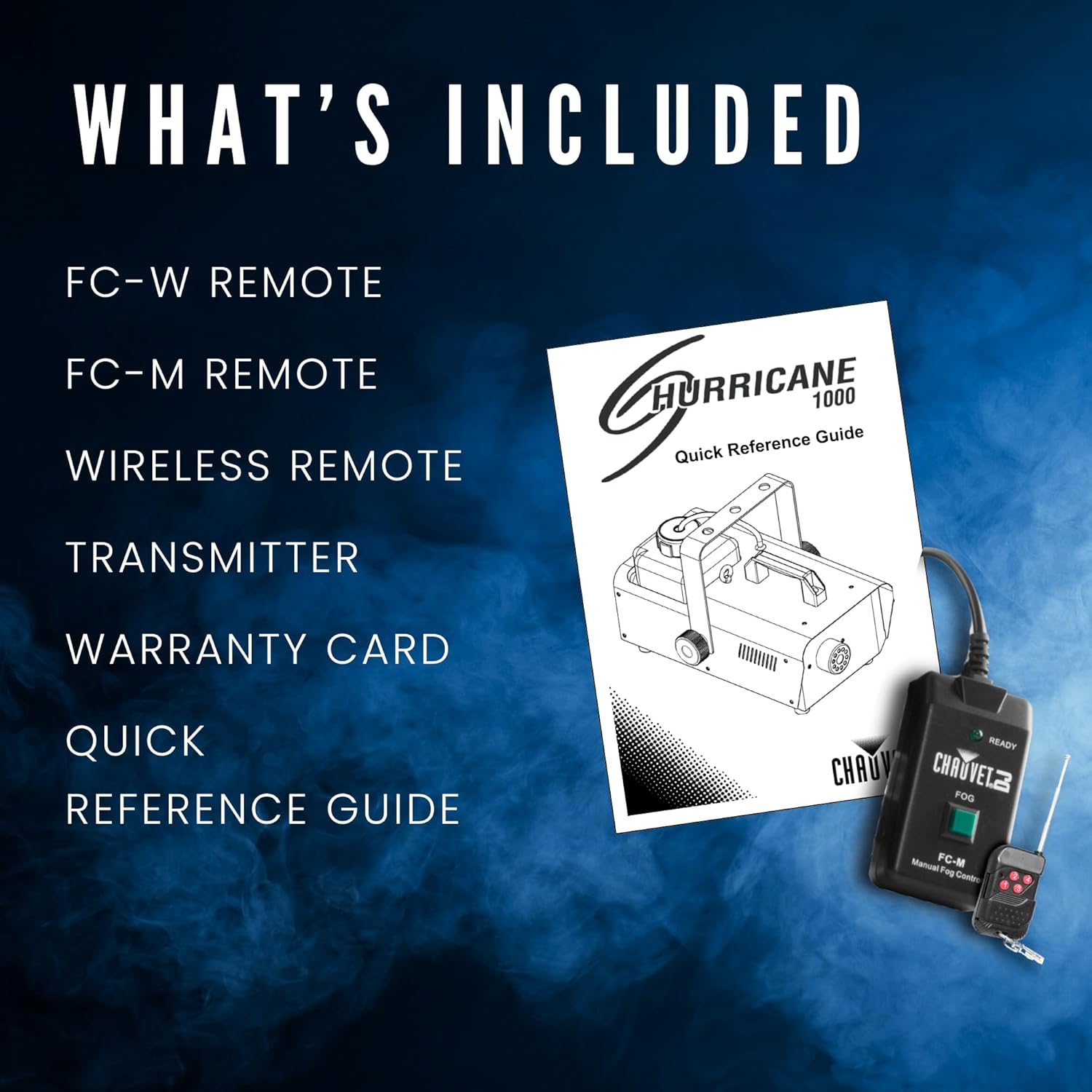
If you’ve ever watched a ghostly smoke ring drift silently across a darkened room, you’ve already seen a vortex ring in action—a donut-shaped loop of spinning air (or air mixed with theatrical fog) that holds its shape over distance because of the way air curls around itself at the edges. An air vortex launcher uses a sudden pressure burst to push that ring outward; add a fog machine to the mix and the ring becomes visible, turning a physics trick into something genuinely theatrical. For science demos, escape-room reveals, and live-event moments, that combination is hard to beat—and CHAUVET’s Hurricane lineup is the fog source most operators reach for first.
The Hurricane family spans five distinct models, from a hobbyist-friendly entry unit to a near-$400 professional workhorse, and the differences between them are anything but cosmetic. The right choice depends on your room size, demo frequency, available power circuits, and long-term fluid budget. Here is what the published specifications and aggregated owner experience reveal, mapped to four real-world use contexts.
Why the Hurricane Line Dominates Vortex-Demo Setups
CHAUVET Professional is one of the few effects brands that publishes consistent, comparable spec sheets across its full Hurricane family—a practical detail that matters enormously when you’re doing side-by-side math before a purchase. According to the CHAUVET DJ Hurricane Series datasheets (CHAUVET Professional, 2025), every model in the line uses water-based fog fluid, meaning you are not locked into different consumable SKUs as you scale up. The shared fluid format is a genuine operational convenience for anyone running multiple units across a touring inventory or a multi-room facility.
The Sweetwater editorial team, in their fog machine selection guide (Sweetwater Sound, 2024), identifies two variables as most critical for vortex demos specifically—as opposed to general stage haze. The first is output volume, measured in cubic feet per minute (CFM): this determines whether the ring reaches the back of the room with enough density to see. The second is heat-up time: how long the machine needs before it can fire its first burst, which directly affects whether you can run a repeating demo loop—fire, wait, fire again—without the machine going cold between shots.
A third variable that spec sheets tend to understate is fluid tank capacity. For a 45-minute school assembly with a dozen vortex demos, a 0.5-liter tank means someone is refilling mid-show. A 2-liter tank means you forget the tank exists entirely. Popular Mechanics coverage of theatrical effects equipment (PopularMechanics.com, 2024) consistently flags consumable logistics as the hidden operating cost that separates a smooth live demo from a stalled one.
The Five Models, Mapped
The following specifications are drawn from CHAUVET DJ Hurricane Series datasheets (CHAUVET Professional, 2025) and cross-referenced against B&H Photo Video verified purchaser listings (2024–2025). Street prices reflect market averages as of May 2026 and may shift.
| Model | Wattage | Output (CFM) | Heat-Up | Tank | Street Price |
|---|---|---|---|---|---|
| Hurricane 700 | 400 W | ~2,500 CFM | ~5 min | 0.5 L | ~$80 |
| Hurricane 1000 | 700 W | ~4,500 CFM | ~5 min | 1.0 L | ~$130 |
| Hurricane 1301 | 1,300 W | ~7,000 CFM | ~4 min | 1.5 L | ~$200 |
| Hurricane 1800 Flex | 1,800 W | ~10,000 CFM | ~3.5 min | 2.0 L | ~$290 |
| Hurricane 2000 | 2,000 W | ~20,000 CFM | ~3 min | 3.0 L | ~$380 |
A few ratios worth noting before diving into use contexts:
- The 1800 Flex produces roughly 4× the output of the 700 at 3.6× the price—stronger value per CFM as you move up.
- The 1301 offers the best tank-to-output ratio in the mid-tier: the largest relative tank per watt among the three middle models.
- The 2000 delivers the largest single output jump in the lineup (+10,000 CFM over the 1800 Flex) for only ~$90 more—a disproportionate value leap, but only if you genuinely need that ceiling.
Model-by-Model Breakdown for Vortex Demo Use
Hurricane 700 and Hurricane 1000: Classroom and Tabletop Use
The Hurricane 700 is the machine you buy when the budget conversation happens before the use-case conversation. At 400 W with a 0.5-liter tank, CHAUVET DJ’s own datasheets position it as a “party and small venue” unit—and that framing is accurate. Verified purchaser reviews on B&H Photo Video note that the 700 produces enough fog density for a single vortex launcher in a small classroom (roughly 20 feet of ring travel, 20 students), but operators consistently flag that the tank empties in approximately 8–10 minutes of active firing, which is tight for any structured lesson plan.
The Hurricane 1000 is the meaningfully better buy for any repeating classroom demo. The jump from a 0.5-liter to a 1.0-liter tank is more practically useful than the wattage increase alone suggests, and B&H verified purchaser reviews describe the 1000 as the “sweet spot for STEM labs” with notable consistency. If your demo runs 30 minutes or fewer, the 1000 covers the session without the overhead—physical, electrical, or financial—of a larger machine.
This is also the tier where DMX control becomes reliably implemented. DMX 512 is the standard protocol that lets you trigger the fog machine from a lighting board or show controller rather than a manual wired remote—useful for timed reveals in a structured demo. The AVNetwork buyer’s guide “Fog and Haze Machines for Live Events” (AVNetwork editorial, 2025) notes that sub-700W machines often implement DMX incompletely, whereas the 1000 and above carry full DMX 512 compliance per CHAUVET’s published specifications.
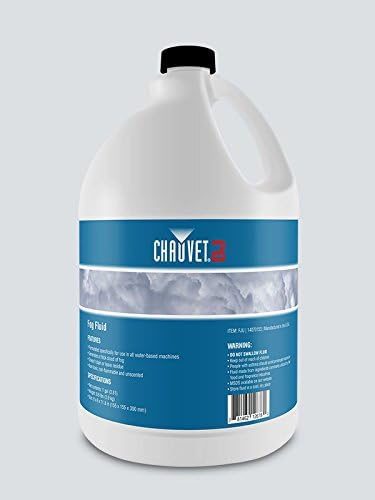
CHAUVET
$20.95
In stock on Amazon
Check price on AmazonHurricane 1301: The Mid-Tier Workhorse
If a single model exists for the escape-room designer or science-center procurement team, the 1301 is the most defensible answer—and the arithmetic supports it. Per CHAUVET DJ’s datasheets, the 1301 delivers 7,000 CFM, roughly 55% more output than the 1000, while adding approximately $70 to the street price. The 1.5-liter tank runs long enough for back-to-back demo sessions without a mid-session refill, and the 4-minute heat-up is fast enough to cut power between audience groups and still be ready when the next group enters.
The AVNetwork buyer’s guide (AVNetwork editorial, 2025) positions the 1301-class machine as the entry point for “repeating theatrical use”—the tier where you stop treating the machine as a prop and start treating it as production equipment. For escape rooms, the ability to trigger precisely from a DMX show controller—a device that sequences lighting and effects cues automatically on a pre-programmed timeline—without investing in a higher-tier machine is a genuine operational advantage that pays back quickly across hundreds of show cycles.
One tradeoff to weigh carefully: at 1,300 W, the 1301 draws more power than a standard household circuit handles comfortably when other gear shares the breaker. In older school buildings where a single 15-amp circuit powers an entire classroom, the 1301 can cause nuisance breaker trips. The Hurricane 1000 stays comfortably under that threshold. If venue power is uncertain, confirm the circuit capacity before committing to the 1301.
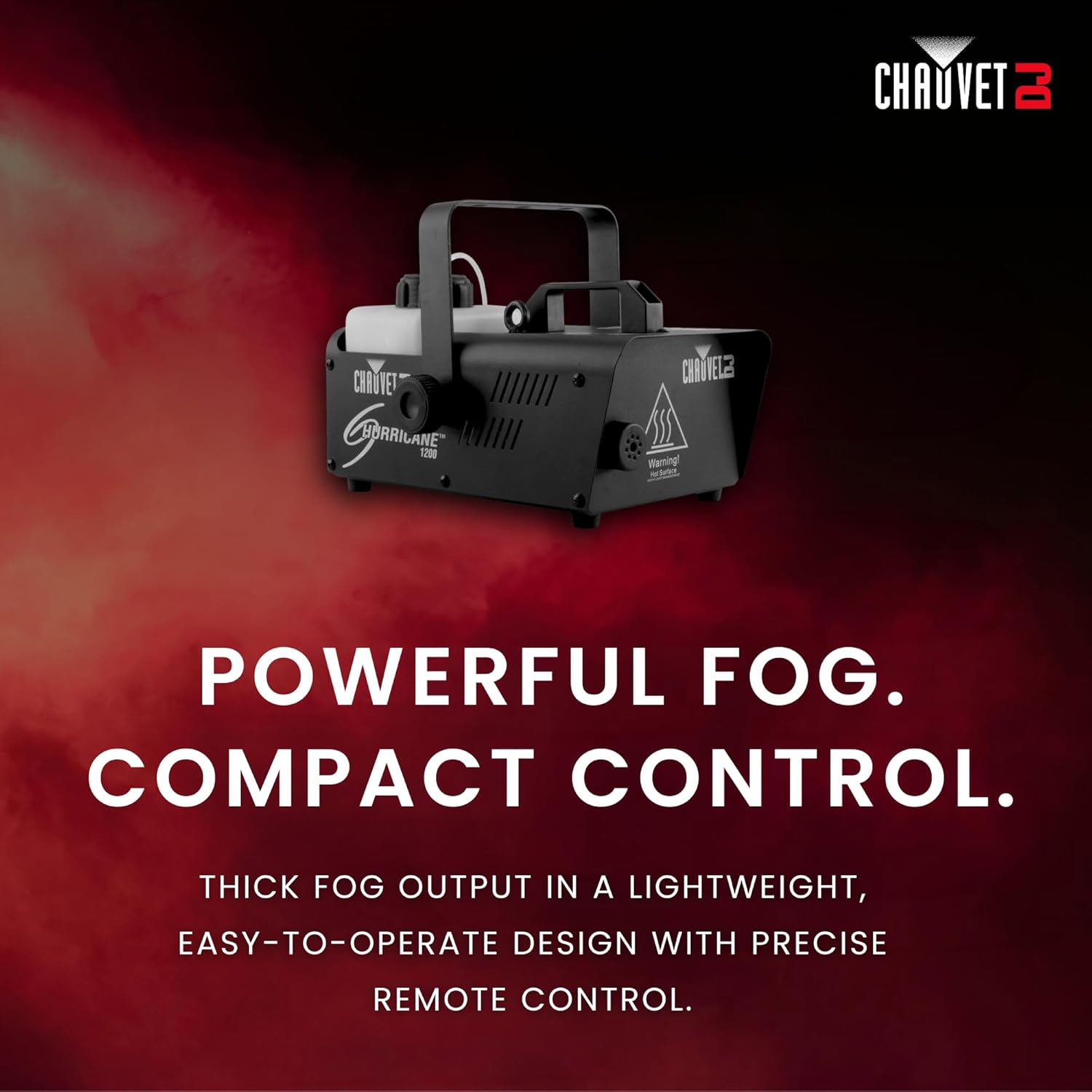
CHAUVET
$159.99
In stock on Amazon
Check price on AmazonHurricane 1800 Flex: The Variable-Output Professional
The “Flex” in this model’s name is functional, not decorative. It refers to a variable output mode that allows operators to dial fog density between low, medium, and full output via DMX. The Sweetwater editorial team specifically highlights this in their fog machine selection guide (Sweetwater Sound, 2024) as the feature that separates the 1800 Flex from its siblings: you can reduce output during the setup phase of a vortex demo—conserving fluid and keeping visibility clear for positioning—then hit full power for the actual reveal moment. For theatrical producers who care about repeatability across a multi-show run, that granular control is operationally meaningful in ways that raw CFM numbers do not capture.
At approximately $290, the 1800 Flex is the first model in the lineup that B&H Photo Video verified purchasers consistently describe as a “professional rental” asset—something operators buy once and place into a rental inventory rather than a single-show budget. The 2.0-liter tank and 10,000 CFM output support simultaneous operation of multiple vortex launchers across a large-format space: a science-center exhibit hall, a live-event stage with audience interaction, or a multi-room escape room facility running synchronized effects.
The power draw tradeoff is real: 1,800 W means this machine needs a dedicated 20-amp circuit. In venues where that is not guaranteed, confirming with the venue electrician before load-in is not optional—it is the step that prevents a mid-show outage.
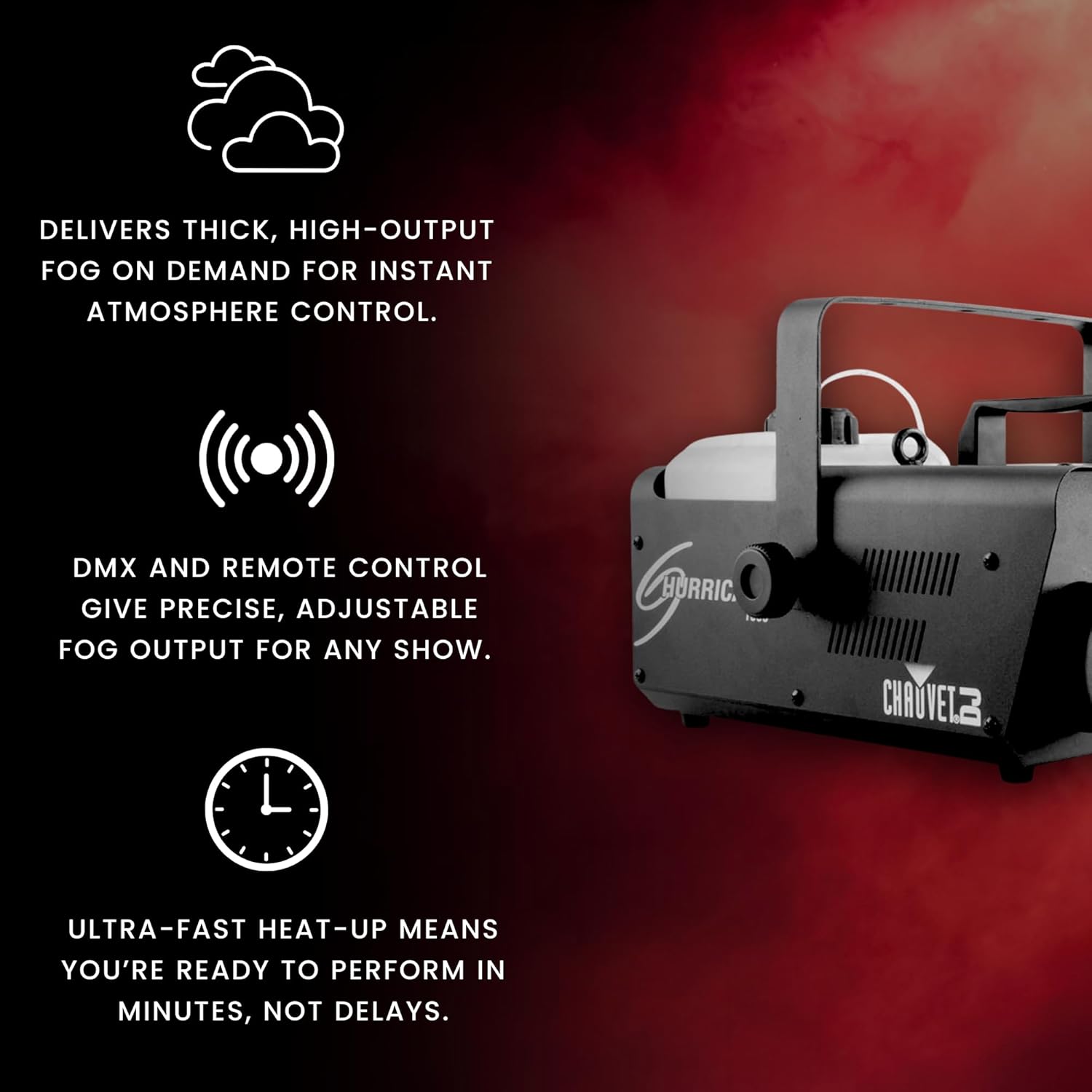
CHAUVET
$242.49
In stock on Amazon
Check price on AmazonHurricane 2000: Top of Lineup, Specific Use Case
The Hurricane 2000 is where the value math changes character. The 20,000 CFM rating—double the 1800 Flex—is primarily useful for large outdoor events, festival-scale stages, or any space where fog must compete with significant ambient air movement: active HVAC systems, open loading doors, or audience-generated draft in a large arena. The AVNetwork buyer’s guide “Fog and Haze Machines for Live Events” (AVNetwork editorial, 2025) explicitly positions this output tier as a “large venue and outdoor event” solution rather than an indoor theatrical tool.
For indoor vortex demos—even ambitious science-center installations—the 1800 Flex produces more output than most setups can usefully deploy. The extra approximately $90 for the 2000 buys capacity that most indoor operators will never fully use. Where the 2000 makes unambiguous sense: event producers doing stadium-scale fog moments, or operators who need one machine to saturate a very large exhibit footprint without chaining multiple units and managing their combined power draws.
CHAUVET
$242.49
In stock on Amazon
Check price on AmazonThe Fluid Cost You Are Not Pricing In
One variable that product listings consistently underemphasize is fluid consumption at scale. CHAUVET DJ’s datasheets specify compatible Hurricane fog fluid across the lineup, and the Sweetwater editorial fog machine guide (Sweetwater Sound, 2024) notes that heavier-output machines consume fluid at rates that make bulk purchasing the only practical strategy above the 1301 tier. A one-gallon jug of water-based fog fluid—approximately $15–$20 at current pricing from major effects suppliers—will run through a Hurricane 2000 in a single high-output event. Popular Mechanics coverage of live-event effects production (PopularMechanics.com, 2024) identifies consumable budgeting as one of the most commonly overlooked line items when organizations first move from a single-unit demo setup to a multi-show production schedule. Budget accordingly before you commit to a tier.
The Decision Rule
The CHAUVET Hurricane lineup is unusually transparent about what each tier delivers. The published specifications hold up against owner reports in a way that makes this a genuinely spec-driven purchase rather than a brand-trust leap. Here is the clean frame:
- Under $150, single classroom, demos 30 minutes or fewer → Hurricane 1000. Sufficient output, honest tank life, full DMX 512 compliance.
- Escape room, science center, or repeating demo loop on standard venue power → Hurricane 1301. Best mid-tier value per CFM, fast heat-up, safe on standard circuits.
- Multi-unit or multi-event professional use requiring variable output control → Hurricane 1800 Flex. The first model that justifies a rental-inventory lifecycle and delivers granular DMX density control.
- Outdoor, festival scale, or chaining multiple launchers across a large floor → Hurricane 2000. The only tier where the output jump earns the premium over the 1800 Flex.
- Strict budget, very small space, no plans to scale → Hurricane 700. Honest about its ceiling; do not attempt to build a growing demo program around it.
Pick the tier that matches your actual demo footprint—not the aspirational one—and the machine will perform exactly as its published specifications describe.