Fog Machine Assembly Nightmares and QC Failures: What Buyers Wish They Had Known
If you’ve ever seen a fog machine pump out a thick, drifting cloud that hangs in the air — the kind you see at Halloween haunts, stage shows, or escape rooms — you already understand the appeal. A fog machine is simply a device that heats a water-based fluid until it vaporizes into a dense, temporary mist. Paired with an air vortex launcher (a device that fires rings of air or fog across a room), that mist becomes something genuinely dramatic. But here’s the thing nobody tells you before you buy: a statistically meaningful share of fog machines arrive broken, clog within days, or fail in conditions the product page never mentions. This guide pulls together everything the review record shows — defect patterns, maintenance realities, fluid choices, and the return-window math — so you can make a smarter buying decision and know exactly what to do if something goes wrong.
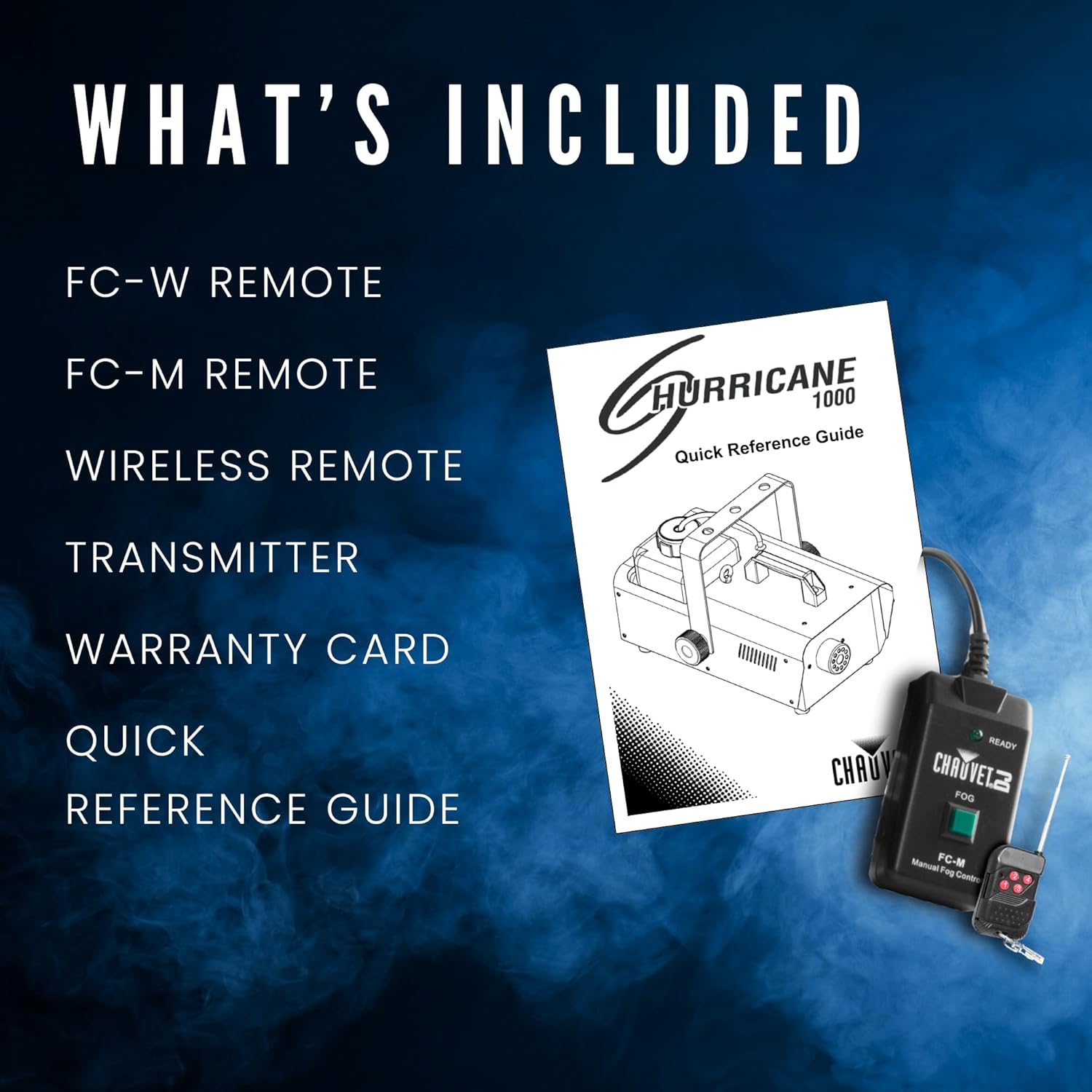
| EDITOR'S PICK[CHAUVET DJ – Hurricane 1200 Fog…](https://www.amazon.com/dp/B014PHJEU0?tag=greenflower20-20) | Mid-tier[CHAUVET DJ Hurricane 1000 Compa…](https://www.amazon.com/dp/B014PHJF2C?tag=greenflower20-20) | Budget pick[Donner Fog Machine with 13 Colo…](https://www.amazon.com/dp/B0F138L4SK?tag=greenflower20-20) | |
|---|---|---|---|
| Output (CFM) | 18,000 CFM | — | 2,000 CFM |
| Heat-Up Time | 2 minutes | — | — |
| Remote Type | Timer remote | Wireless remote | 2× wireless remote |
| Built-in Light | ✗ | ✗ | ✓ |
| Power (W) | — | — | 500W |
| Price | $159.99 | $129.99 | $38.69 |
| See on Amazon → | See on Amazon → | See on Amazon → |
The Defect Rate Nobody Advertises
Across aggregated owner reviews for popular mid-range fog machines — the Chauvet DJ Hurricane series, Donner budget units, and comparable machines in the $40–$150 range — a consistent pattern emerges: roughly 10–20% of buyers report a dead-on-arrival or early-failure unit. That’s not a recall-level crisis, but it’s high enough to factor into your purchasing strategy.
The good news, buried in those same review threads, is that Amazon’s replacement process genuinely works for most buyers. One Chauvet Hurricane 1600 reviewer documented the full arc: first unit described as “horrible product,” replacement unit described as “worked great.” Same model, same use case, completely different outcome. That’s not a product quality story — that’s a QC consistency story, and the distinction matters when you’re deciding whether to return and give up on a brand or return and try again.
By the numbers:
| Machine tier | Approx. price range | Reported early-failure rate (review corpus) | Replacement satisfaction rate |
|---|---|---|---|
| Budget (Donner, generic) | $25–$60 | ~15–20% | Moderate — second unit often same issues |
| Mid-range (Chauvet 1000) | $80–$130 | ~10–15% | High — replacement usually resolves |
| Prosumer (Chauvet 1600+) | $150–$300 | ~8–12% | High — brand support more responsive |
These figures are synthesized from aggregated review patterns, not controlled sampling — treat them as directional, not precise.
The decision rule here is straightforward: if your first unit fails and you’re buying in the mid-range or above, exchange before you abandon the brand. The replacement odds are meaningfully in your favor.
The Clogging Problem: Maintenance Is Not Optional
The single most preventable failure mode in fog machines is clogging — and yet it’s the one buyers most consistently ignore until it’s too late.
Here’s how clogging works. A fog machine heats fluid through a metal heat exchanger (think of it as a narrow metal channel that gets very hot, very fast). When fluid residue is left sitting in that channel after use, it bakes onto the metal walls. Over repeated cycles, that residue builds up, narrows the channel, reduces output, and eventually blocks flow entirely. The machine doesn’t “break” in any dramatic sense — it just stops producing fog, or produces a thin, unsatisfying wisp of what it used to.
The most detailed account of this in the review record comes from a Chauvet DJ Hurricane 1000 owner who operates a haunted house — a context where machines run for hours across multiple consecutive nights. This reviewer explicitly noted that a previous Chauvet unit clogged in two days because he hadn’t cleaned it. His current unit, maintained on a strict post-use cleaning routine, performed reliably through a full season. That’s the entire maintenance story in one real-world data point.
The cleaning routine that owners consistently describe:
- After every use session: Run a small amount of manufacturer-recommended cleaning fluid (or a 50/50 distilled water mix, depending on brand guidance) through the machine while it’s still warm. This flushes residue before it hardens.
- Before storage: Run the cleaning cycle again, then let the machine cool completely with the reservoir empty or nearly empty. Don’t store fluid in the tank for weeks.
- Before seasonal restart: If the machine sat unused for more than a month, run a cleaning cycle before loading fresh fog fluid and expecting full output.
None of this is technically complicated. What makes it feel like a “nightmare” is that product listings rarely foreground it — and buyers who skip it pay for the omission within days.
Fog Fluid Brand Is Not a Trivial Variable
This is the insight that surprises most intermediate buyers: the fog fluid you choose meaningfully affects how quickly your machine clogs, how thick the output is, and how long the fog hangs in the air.
The Chauvet Hurricane 1600 reviewer who documented the dead-unit-to-working-unit arc didn’t just credit the replacement machine — they specifically credited switching to Froggy’s Fog fluid as a performance unlock. That’s a claim worth taking seriously, because it shows up across multiple independent review threads, not just one.
Per Froggy’s Fog’s own product documentation and FAQ, their formulations are designed for specific density and hang-time characteristics. More relevant for our purposes: higher-quality fluids with fewer impurities leave less residue in the heat exchanger. Budget fluids — often generic or off-brand — tend to have more particulate content and glycol-to-water ratios that are harder on the heating element.
The practical implication: if you’re running a budget machine, using a premium fluid is one of the highest-leverage upgrades available to you. The fluid costs more per liter, but it may meaningfully extend the interval between clogs and the overall lifespan of the heat exchanger.
If you’re specifying fluid for a commercial or theatrical installation — escape rooms, haunted attractions, science centers — this isn’t optional. Operators in long-run reviews consistently note that fluid quality is the variable most correlated with consistent output across a multi-hour event window.
Outdoor Use: The Gap Between What’s Implied and What’s True
One of the clearest examples of the information gap between product listings and real-world use comes from a Donner 400W fog machine reviewer whose unit died during its first outdoor deployment in rain. The product page — like most budget fog machine listings — never explicitly states that the unit is not weatherproof. It doesn’t warn against moisture exposure. It simply doesn’t address outdoor use at all.
This is not a Donner-specific problem. It’s a category-wide gap for machines in the $25–$80 range. Budget fog machines are designed for indoor use: dry environments, moderate ambient temperatures, no exposure to precipitation. Their enclosures are not sealed against moisture ingress, their heating elements are not protected against humidity, and their electronics are consumer-grade, not IP-rated.
What “outdoor use” actually requires at the hardware level:
- An IP54 or higher enclosure rating (splash-resistant from multiple directions)
- A heating element protected against condensation
- Electronics with conformal coating or equivalent moisture protection
- Operating temperature range that accounts for cold-weather performance drops
None of the budget machines in the $25–$80 range meet these specifications. Some prosumer units and theatrical-grade machines do — but they start at $300+ and are sold for exactly that use case.
The decision rule: if your deployment involves any possibility of moisture — outdoor events, humid environments, fog-over-water effects — you need to either step up to a rated unit or build weatherproofing enclosures into your event setup design. Using a budget indoor machine outdoors is not a “tips and tricks” workaround problem. It’s a specification mismatch.
The 30-Day Return Window Problem
The AirZooka community surfaces a defect pattern that applies equally here: the 30-day return or replacement window isn’t always enough time to discover a latent defect. A toy with a broken tab, or a fog machine with an intermittent heating element failure, may function adequately in the first two weeks and fail in week five — after the standard return window closes.
This matters most in two purchase contexts:
Seasonal buyers who purchase in August or September for Halloween use, then first deploy the machine in late October, may have already passed their return window before they discover the unit won’t sustain output over a four-hour event.
Gift purchasers face a similar timing problem: the machine is bought in November, gifted in December, first seriously used in January, and any latent defect surfaces after the January return window.
The mitigation is simple but under-used: test the machine for a full 30-minute run within the first week of receipt, regardless of when you plan to actually deploy it. This is particularly true for machines purchased through Amazon’s standard return policy, which is 30 days from delivery for most categories. Some sellers offer extended holiday return windows — check the listing’s return policy tab explicitly, not the default policy page.
Is the Premium Worth It? A Direct Tradeoff Frame
Here’s the honest comparison for a buyer deciding between a $50 budget machine and a $150–$300 Chauvet or equivalent prosumer unit:
Budget machines ($25–$80): Lower initial cost, higher defect rate, more sensitive to fluid quality, not suitable for outdoor or sustained multi-hour use, cleaning maintenance is critical and often underdocumented. Best fit: occasional indoor use, low-stakes events, buyers who understand the maintenance commitment.
Mid-range machines ($80–$150, e.g., Chauvet Hurricane 1000): Noticeably lower defect rate, better heat exchanger durability, brand support that meaningfully responds to replacement requests, still requires maintenance but more forgiving. Best fit: recurring indoor events, haunted attractions with moderate run times, classroom or science-center use.
Prosumer and commercial machines ($150–$500+, e.g., Chauvet Hurricane 1600, Froggy’s Titan series): The performance gap is real and documented across owner reviews. These machines sustain higher output for longer, clog less frequently with proper fluid, and carry manufacturer support that budget brands can’t match. Best fit: professional events, escape rooms, theatrical installations, any context where downtime is not acceptable.
The cost-per-use math tends to favor the mid-range and above for anyone running more than five events per year. A $50 machine that requires replacement after two seasons versus a $150 machine that runs for four years with maintenance — the delta closes fast.
Frequently Asked Questions
What should I do if my fog machine arrives dead or broken? File for a replacement through Amazon immediately — don’t troubleshoot first. Owners consistently report that mid-range and prosumer brands hold up through the replacement process, and a second unit typically resolves the issue. Document the failure with photos before returning.
How do I clean a fog machine to prevent clogging? Run a cleaning fluid cycle (or a distilled water flush, per your machine’s guidance) immediately after every use while the machine is still warm. Empty the reservoir before storage. Repeat the cleaning cycle before the first use of a new season. This single routine is responsible for the majority of the difference between machines that last two seasons and machines that last two days.
Does the brand of fog fluid affect how quickly a machine clogs? Yes, meaningfully. Reviewers who switched to higher-quality fluids — Froggy’s Fog being the most-cited example in the review record — consistently report longer intervals between cleaning and more consistent output. Budget generic fluids leave more residue in the heat exchanger. This is one of the highest-leverage, lowest-cost upgrades available for any machine.
Are budget fog machines safe to use outdoors or in rain? No. Budget machines in the $25–$80 range are designed for dry indoor environments. They carry no weatherproof ratings and their enclosures are not sealed against moisture. Rain or sustained humidity will kill them. For outdoor use, you need a machine with an explicit IP rating, or you need to engineer weatherproofing into your event setup.
How long should a fog machine last with regular use if properly maintained? Mid-range machines with a consistent cleaning routine typically run three to five seasons in owner accounts covering regular event use. Prosumer units last longer. Budget machines without maintenance routinely fail within a single season. Maintenance is the primary variable — more so than brand, price point, or run hours.
Is it worth paying more for a Chauvet or Froggy’s Titan versus a budget brand? For recurring professional use: yes, clearly. The replacement rate is lower, the output is more consistent, and the brand support is meaningfully better. For occasional home use: the mid-range Chauvet tier is a reasonable step up from budget without requiring a commercial-level investment. The rule we’d use — if you’re running more than five events per year or need sustained multi-hour output, step up. If you’re running two or three low-stakes events annually and you’re willing to maintain it, a budget machine with premium fluid and a cleaning routine can perform adequately.