If you’ve ever watched a horror movie and noticed that eerie white mist rolling across the floor — never rising, just creeping forward at ankle height — you’ve seen low-lying fog in action. Regular fog from a standard fog machine rises quickly because it starts warm; it only stays near the ground when it’s been cooled down first. There are two main ways to do that cooling: buy a machine designed specifically for low-lying fog, or build a DIY chiller that cools the output of a standard fog machine yourself. Both paths work, and both have real limitations. If you’ve got a Halloween haunt, a theatrical stage production, an escape room, or a large event where ground fog is part of the atmosphere you’re selling, the choice matters — not just aesthetically, but operationally. Here’s what we found when we pulled together every spec sheet, owner review, and technical resource available on this decision.
Why Fog Rises (and What Stops It)
The physics here is straightforward, and it’s worth naming explicitly because it governs every decision downstream. The Physics Classroom’s “Density and Buoyancy” concept explainer — a freely available educational resource at physicsclassroom.com — establishes that objects and fluids, including air masses, move vertically based on their density relative to their surroundings. Warmer air is less dense than cooler air and rises; cooler, denser air sinks. Fog obeys exactly this principle.
Standard fog machines work by heating a glycol-based fluid until it vaporizes and expands into a visible mist. That mist exits the nozzle warm — often between 120°F and 170°F depending on the machine. Because it’s warm, it’s less dense than surrounding ambient air, so it rises. Low-lying fog works by chilling that output before or as it leaves the machine, so the fog becomes denser than the surrounding air and sinks to the floor.
There are three practical ways to achieve this chilling effect:
- Dry ice — solid CO₂ sublimates directly into cold CO₂ gas, which dramatically chills fog. Steve Spangler Science’s “Dry Ice Safety and Science” educational resource, available at stevespanglerscience.com, notes that dry ice surfaces run at approximately −109.3°F (−78.5°C), making it the most powerful passive chilling medium available for fog applications. It’s theatrical and hard to beat on pure density — but also expensive, logistically complicated, and requires safe handling protocols.
- A dedicated low-lying machine with an ice reservoir — units like the ADJ Products Mister Kool II use bags of regular water ice packed into a chamber through which the fog passes. Easier and safer to source than dry ice, but with real runtime limitations.
- A DIY chiller — you build or assemble an ice-filled chamber, connect a standard fog machine’s output through it via flexible ducting, and discharge cooled fog at floor level. This is the maker-community path, and it produces results that owners consistently describe as surprisingly professional.
Understanding which method suits your event means thinking about runtime, ambient temperature, budget, and wind exposure — all of which interact in ways that aren’t obvious until you’ve seen one session go sideways.
Comparing the Three Main Approaches
Budget Path: DIY Ultrasonic Mister Plus Entry-Level Fog Machine
The most cost-accessible entry point pairs a standard 500W fog machine with a multi-head ultrasonic mister unit. Owners who’ve run this pairing describe the results as a strong performer for Halloween displays, and the review language is notably enthusiastic for a DIY approach.
Here’s how it works: the ultrasonic mister produces a fine water mist that cools and humidifies the air in the discharge path of the fog machine, lowering the temperature of the fog output enough to drop it toward floor level. It’s a different cooling mechanism than an ice bath — you’re introducing cold water vapor into the fog stream rather than routing fog through packed ice — but the density effect is real and documented across multiple independent owner accounts.
Where the budget DIY combo wins:
- Combined retail of a 500W fog machine and a multi-head ultrasonic mister typically falls below the price of a dedicated low-lying unit
- Ultrasonic misters don’t require ice refills; they run off a water reservoir that can be much larger or continuously topped off
- Scalable — you can add additional fog machines or mister heads without replacing the core unit
Where the budget DIY combo falls short:
- This is not plug-and-play; you’re managing two devices, coordinating their timing, and likely routing ducting
- Owner results vary more than with dedicated units; ambient humidity, room size, and fluid choice all affect output noticeably
- Wind sensitivity remains a fundamental problem regardless of chilling method
Best for: Hobbyists, first-time haunters, and budget-conscious makers willing to spend a setup session dialing in results before the actual event.
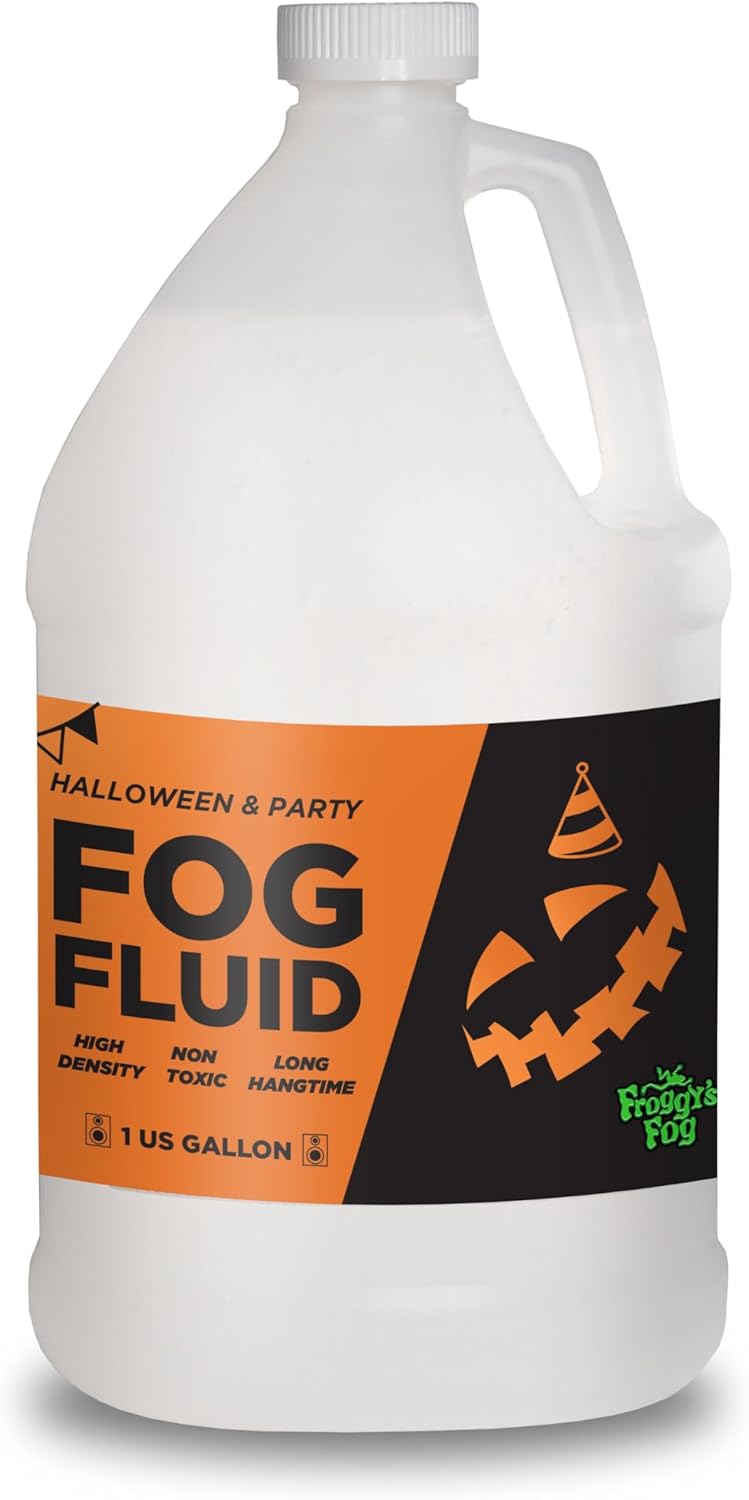
Froggy's
$24.99
In stock on Amazon
Check price on AmazonMid-Tier Path: Dedicated Low-Lying Machine (ADJ Products Mister Kool II)
The ADJ Products Mister Kool II is the most discussed dedicated low-lying fog machine at its price tier — retailing typically between $199 and $249 as of mid-2026, per ADJ Products’ published specification sheet. It uses an integrated ice reservoir — you fill it with standard party ice or ice bags — and produces a rolling ground fog without requiring dry ice. For buyers who want a self-contained, plug-and-play solution, it checks a lot of boxes.
Owners consistently praise its ability to produce genuinely low-lying output when two conditions are met: an appropriate low-lying fog fluid and cool ambient temperatures. Owners in climate zones with cold October nights specifically note that the Mister Kool II performs moderately well even in suboptimal conditions once outdoor temperatures drop — a geographically specific but useful data point for Halloween haunts in the northern United States.
The complaints, however, are consistent and worth taking seriously before you commit:
- Ice reservoir capacity is flagged repeatedly as the dominant operational limitation. Most owners report needing a refill within 20–30 minutes of continuous operation, sometimes faster in warm indoor environments. For a 4-hour event, that’s a significant logistics burden.
- Wind sensitivity is described as a near-total effect killer. Even a subtle cross-breeze disrupts the density layer that keeps fog low. Owners running the Mister Kool II outdoors or near HVAC vents report that the ground fog simply doesn’t hold.
By the numbers — ADJ Products Mister Kool II operational snapshot (per ADJ Products manufacturer specification sheet):
- Typical ice reservoir runtime: 20–30 minutes before refill required
- Rated fog output: 1,600 cubic feet per minute
- Optimal ambient temperature range: below approximately 65°F for best low-lying performance
- Wind threshold for effect failure: as low as 1–2 mph crosswind per aggregated owner accounts
Best for: Event operators and haunt runners who prioritize plug-and-play simplicity, run sessions under 30 minutes, and operate in a cool, enclosed, low-airflow environment.

Froggy's
$29.99
In stock on Amazon
Check price on AmazonPremium Path: Dry Ice Chiller Setup
For professional haunts, theatrical productions, and high-stakes events where the ground fog effect is non-negotiable, a dry ice chiller setup delivers performance that ice-based and ultrasonic systems simply cannot match. As documented in Steve Spangler Science’s “Dry Ice Safety and Science” educational resource at stevespanglerscience.com, the extreme cold of dry ice — sublimating at −109.3°F — produces a fog-cooling effect that creates a dramatically denser output layer, one that holds at floor level even in moderately challenged airflow environments that would defeat the other two approaches.
The tradeoffs are real:
- Dry ice sourcing requires planning; it’s sold at select grocery chains, party supply vendors, and restaurant suppliers, but availability varies by region
- Safe handling requires insulated gloves and ventilated storage; Steve Spangler Science’s dry ice safety materials cover the core handling protocols clearly
- Cost per event is higher, with dry ice priced by the pound and consumption rates that scale with fog output
- Legal and venue considerations — some venues restrict dry ice use due to CO₂ accumulation concerns in enclosed spaces with limited ventilation
Best for: Professional haunt operators, theatrical stage productions, and any application where the visual quality of ground fog is the headline feature of the event and the budget accommodates premium consumable costs.
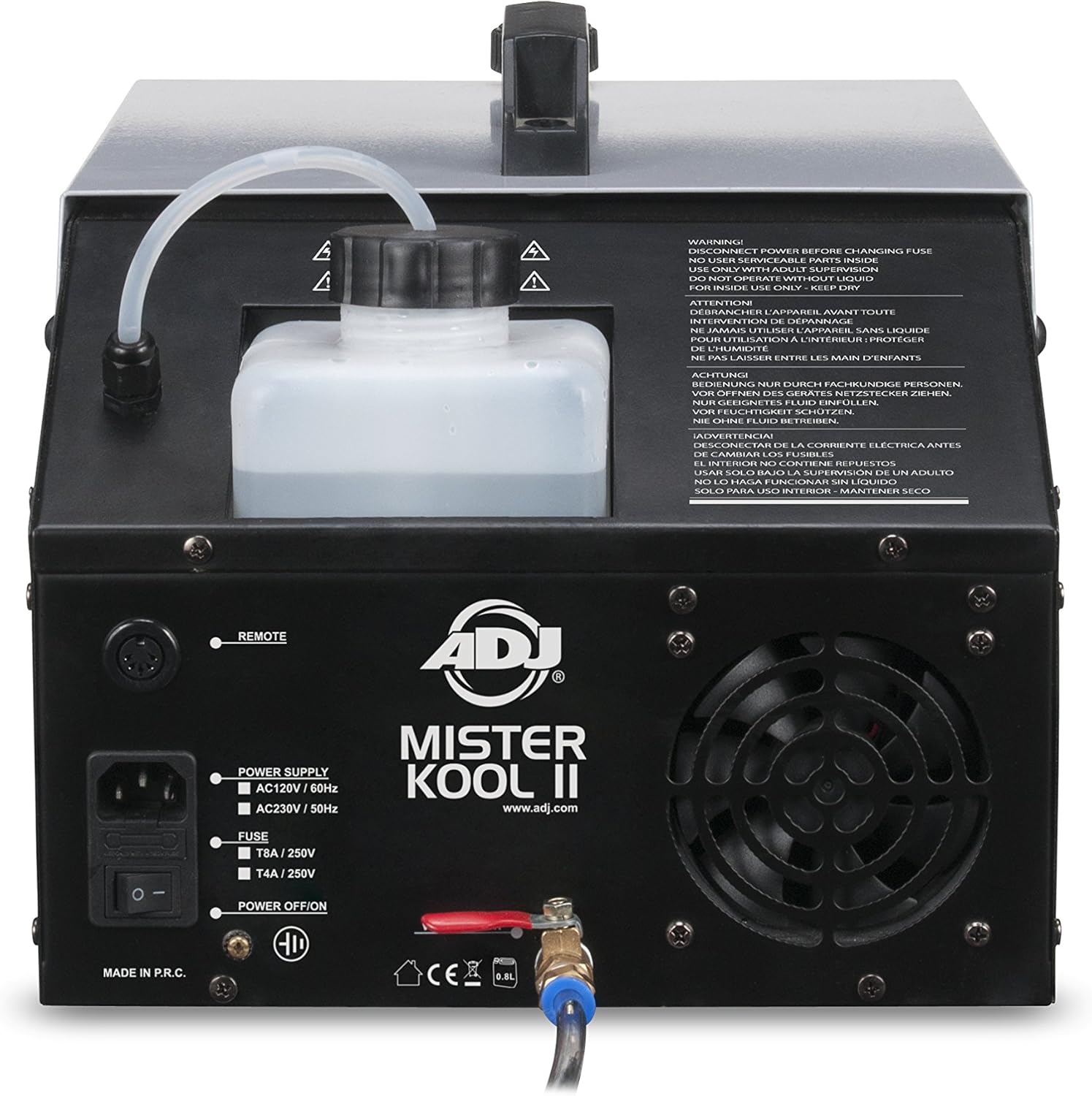
ADJ
$229.99
In stock on Amazon
Check price on AmazonFluid Choice: The Variable Most Buyers Get Wrong
If there’s one underrated factor in the low-lying fog conversation, it’s fluid selection — and the real-world data here directly contradicts some product marketing.
Froggy’s Fog Swamp Juice is consistently called out in owner documentation for exceptional hang time, with users describing sustained low-lying behavior under good conditions for extended periods. Per Froggy’s Fog’s own product documentation, Swamp Juice is engineered specifically for chiller and ground fog use — it is not a general-purpose theatrical fluid. Its denser glycol base is formulated to resist rising, which is the exact behavior you need in a low-lying application.
Chauvet DJ High-Density fluid, by contrast, generates a more complicated owner picture. Despite marketing language implying high output and density, multiple reviewers — including owners who specifically ran it through a homemade dry-ice chiller — report that it tends to rise rather than hold at ground level. This is a real-world finding that directly contradicts the “high-density” framing on the Chauvet DJ product label, as reflected in aggregated reviewer feedback across the Chauvet DJ High-Density fluid product page. Spec sheets and marketing copy don’t always translate to floor-level behavior, and the Chauvet DJ High-Density fluid is the clearest example of that gap in this category.
The practical rule: fluid density affects whether fog rises or stays low, but not all “high-density” labeled fluids behave the way the label implies. For low-lying applications, look for fluids specifically marketed for ground fog or chiller use. Using a standard theatrical fog fluid through a chiller setup is likely to produce disappointing results regardless of how good your cooling apparatus is.
Wind: The Variable Nobody Talks About Enough
Both dedicated low-lying machines and DIY chiller setups rely on maintaining a density differential between the fog layer and the air immediately above it. Any horizontal airflow — HVAC cycling, a door opening, or outdoor ambient wind — disrupts that layer by mixing the denser fog with the lighter ambient air. The Physics Classroom’s “Density and Buoyancy” concept explainer at physicsclassroom.com makes clear that density differentials are equilibrium-seeking: introduce mixing energy through wind, and the stratification collapses.
Practical mitigations that appear consistently in owner accounts:
- Control airflow at the source — turn off HVAC in the performance zone during fog sequences, or time fog to run when HVAC is in a down cycle
- Use baffles or directional barriers at floor level to slow crosswinds
- Position discharge points away from doorways, entrances, and any other airflow sources
- Outdoors is genuinely difficult — owners running ground fog at outdoor events in even mild wind consistently report poor results regardless of setup
Frequently Asked Questions
Do I need dry ice to get fog to stay on the ground, or can regular ice work? Dry ice is the most powerful chilling option and produces the densest, longest-lasting low-lying effect — but it’s not required. The ADJ Products Mister Kool II uses regular water ice and produces genuine ground fog, per the ADJ Products Mister Kool II owner’s manual. DIY ultrasonic mister combos skip ice entirely. Regular ice and mister-based cooling work; they’re just more sensitive to ambient conditions than dry ice setups.
Will any fog fluid work in a low-lying machine, or do I need a special formula? You need a fluid formulated for low-lying or chiller use. Standard theatrical fog fluids are designed to rise and fill a space — they’ll fight your chiller system. Froggy’s Fog Swamp Juice is the most consistently praised option in this application, per Froggy’s Fog product documentation and aggregated owner accounts. Chauvet DJ High-Density fluid, despite its label, is documented to rise rather than stay low in chiller setups per aggregated Chauvet DJ reviewer feedback.
How much does wind affect ground fog, and what can I do about it? Wind is the primary enemy of ground fog. Even a 1–2 mph crosswind can destroy the density layer that keeps fog low, consistent with density-differential principles described in The Physics Classroom’s “Density and Buoyancy” explainer at physicsclassroom.com. Mitigation options include disabling HVAC during fog sequences, positioning discharge points away from doorways, and using floor-level baffles to reduce airflow. Outdoor ground fog in any meaningful wind is very difficult to sustain with any setup.
How long does an ice reservoir typically last before needing a refill? Based on aggregated owner accounts of the ADJ Products Mister Kool II and the ADJ Products Mister Kool II specification sheet, expect 20–30 minutes of continuous operation before refill is needed — and potentially less in warm environments. Plan for ice logistics if you’re running sessions longer than 30 minutes.
Can I build a DIY chiller using a standard fog machine and get the same result as a dedicated low-lying unit? Yes, with caveats. Owners pairing a 500W fog machine with a multi-head ultrasonic mister describe results they characterize as professional-grade. The DIY path offers better runtime flexibility and lower cost, but requires more setup work and produces more variable results depending on room conditions and fluid choice.
The Decision Rule
Here’s the clean version:
- Budget path (DIY ultrasonic mister plus 500W fog machine): Best runtime flexibility and lowest cost, but requires setup effort and produces variable results. Use Froggy’s Fog Swamp Juice. Froggy’s — $24.99
- Mid-tier path (ADJ Products Mister Kool II): Best plug-and-play simplicity for sessions under 30 minutes in cool, enclosed, low-airflow environments. Accept ice refill logistics as a fixed operational cost. Froggy’s — $29.99
- Premium path (dry ice chiller setup): Best visual performance and wind resistance, at higher cost and logistical complexity. Follow dry ice safety protocols as outlined in Steve Spangler Science’s “Dry Ice Safety and Science” educational resource at stevespanglerscience.com. ADJ — $229.99
In every case: use fluid explicitly formulated for chiller or ground fog use. Skip any fluid labeled “high-density” that isn’t specifically documented for low-lying applications — the Chauvet DJ High-Density fluid is a documented case where the label doesn’t match real-world low-lying performance per aggregated reviewer accounts. And solve your airflow problem before your event, not during it. No chiller setup overcomes consistent airflow disruption, and no fluid formula changes that physics.